



China’s newfound dominance of the Australian automotive industry is for real, according to a panel of ANZ experts — but in an industry historically defined by cycles, it is by no means permanent.
In April, data from the Federal Chamber of Automotive Industries showed China surpassed Japan in February as Australia’s largest source of new vehicles on the back of, among other things, growing consumer interest in electric vehicles (EV). Japan had held that spot since 1998.
Since then, China’s lead on other markets has only grown. In July, data from the Federal Chamber of Automotive Industries (FCAI) showed Chinese-built cars made up 35.5 per cent of new vehicles sold in Australia during June, ahead of Japanese-built vehicles at 20.7 per cent.
But the automotive sector is an innovative, always-changing space, ANZ’s Alfred Bae, Head of International Tech & Auto, told ANZ Institutional Insights — and there was no guarantee how long that status quo will last.
“I agree it's a structural shift, but it comes down to who's investing in research and development, and investing into [the Australian] market right now,” he said. “There was a structural shift when Japanese manufacturers entered the market, then with the Koreans, and now it's happening with Chinese manufacturers.
“Who's to say that it's not going to happen with another market 10 years from now? India’s industry, for one, is growing rapidly.”
ANZ’s Michael Kay, Head of Automotive - Australia, said the Australian import story was one of cycles, and China’s ascendency was just the latest in this pattern.
“When I was younger, there was pretty much only Holden, Ford and Chrysler in Australia,” he said. “Plus the European manufacturers like VW, BMW, Benz and Volvo.
“Manufacturers from Japan came in and, after a somewhat slow start, improved their engineering, and eventually dominated the market.
“Later, Hyundai and Kia came from Korea, with products like the then-popular Hyundai Excel, and eventually competed with Japan. The whole thing has always evolved and will continue to.”
Chester Wang, Head of Corporate Coverage and Shanghai Branch Manager, ANZ China, said part of the advantage of Chinese automakers was they are “at the cutting edge of the development”.
“They're bringing over new models, and new technology in those models,” he said. “They’re producing stock that are ready for overseas safety standards. And they are able to innovate quickly as well, because they’re quite nimble in their production.”
Bae said the shift in the Australian market was less about geography, and more about “companies that have continued to innovate, continued to spend money developing the best vehicles”.
“It's not a because it's Chinese, it's not that,” he said. “It’s because — for now — they’re better value cars.”
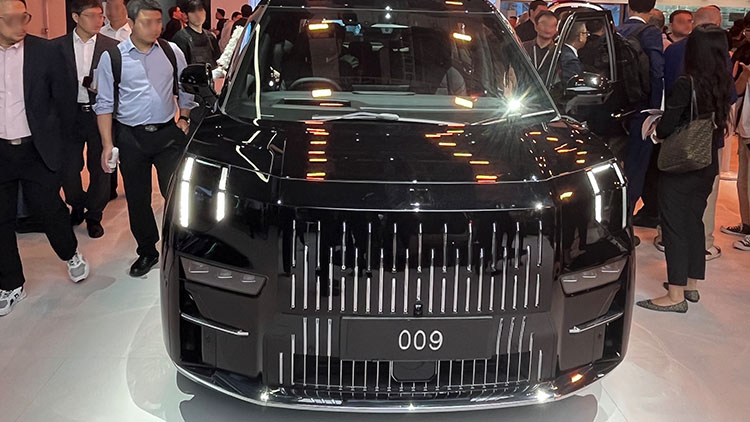
Zeekr’s 009 at the 2025 Shanghai Motor Show. Pic: Michael Kay
Landscape
Change is constant, and the shift in the Australian space in the past 12 months has been stark, according to Kay.
“The landscape has changed in Australia,” he said. “Full stop.”
That shift has come amid overall growth in the space. FCAI data showed Australia recorded its strongest ever month for new vehicle sales in June, at more than 140,000 cars. For Kay, the demand for Chinese-produced vehicles is visible at the dealership level.
“I spend some time at dealerships in Australia to see the latest products from all manufacturers,” he said. “It’s been unbelievable seeing the foot traffic in outlets with Chinese cars.
“China was around 4 per cent of the market in 2020. The growth has been extraordinary.”
Bae attributes some of the recent growth spike to a reduction in the consumer doubt faced by Chinese manufacturers when they first entered the market.
“That initial scepticism around quality, builds, reliability, that is now all being debunked,” he said. “What people have realised is you can actually get a quality vehicle from these brands. And the brands themselves have improved their awareness, proposition, and value. Today, consumers and businesses have a better understanding of where they sit.”
The COVID-19 pandemic was a key turning point, according to Kay, as supply chain pressure created stock shortages in Australia for many then-popular brands, driving consumers to break existing habits.
“Some of the big names lost their loyalty during COVID,” he said. “And with rising cost of living pressures in Australia, price has become an area of increased competition.”
Of course, Australia is not the only market Chinese vehicles are dominating. In the mid-2020s, China overtook Japan as the world’s biggest exporter of vehicles, and July data from the China Association of Automobile Manufacturers showed exports grew 72 per cent in the first half of 2026, compared to the previous corresponding period.
Despite their reputation as extremely competitive on pricing, Wang stresses Chinese manufacturers were not simply offloading stock at a loss.
“They're making cars more efficiently,” he said. “It’s true there’s some overcapacity, but they’re also very agile in their production as well.”
Sales beget sales, and Bae expects growing brand awareness to continue to drive success for Chinese exports, both in Australia and offshore.
“When you look at the traditional Europeans, Japanese and Korean brands, they benefit from consumers knowing what they are buying,” he said. “I think that's becoming a lot clearer for consumers when it comes to Chinese brands, too, which is then helping them compete.
“Combined with increasing innovation, differentiation, and pricing points, these brands are becoming very strong candidates in these export markets.”
Drivers
When it comes to the story of Chinese cars in Australia, it’s hard to go past the rise of EVs.
FCAI data showed 36 per cent of all vehicles sold in Australia in June were EVs. In May that figure was 46 per cent. Battery electric vehicles alone in July accounted for 23.3 per cent of all sales, up from just 7.6 per cent in the previous corresponding period.
This seemingly insatiable demand is driving a surge in shipping trade, with the Port of Melbourne reporting an 83 per cent jump in imports of Chinese cars.
Among brands, the dominant force in July was China’s BYD, which sold just shy of 19,000 vehicles during June alone, snapping at the heels of Australia’s long-time favourite brand, Toyota.
So what’s behind this spike? It would be easy to point the finger at the rise in oil prices driven by global geopolitical conflict discouraging buyers from combustion engines. But Insights’ panel was not convinced.
“The trend was already ongoing,” Wang said. “If the conflict has done anything, it’s just moved the trend a little bit faster, and the OEMs [original equipment manufacturers] are able to meet that demand.
“The behaviour of buyers has changed. That’s been the driver.”
Kay agreed.
“People who want a hybrid will buy one,” he said. “People who want an EV will buy one.”
Changes to the tax treatment of EVs in Australia from April 2027 are also expected to support demand, as potential buyers enter the market “before some of the subsidies dry up”, Kay said.
On the other side of demand, however, is supply. The Insights’ panel agreed China’s unique attributes make it well-placed to provide a global market increasingly hungry for EVs.
“China on its own has really developed its manufacturing ecosystem around EVs,” Bae said. “These brands are able to source pretty much everything they need locally, including the rare-earth materials which are absolutely critical for the magnets used in EV motors.”
China’s market-dominating role in rare earths has been heavily reported. According to the International Energy Agency, China is the leading refiner of 19 out of 20 important “strategic minerals”, with a 70 per cent average market share. In the elements used for the magnets Bae referred to, China accounts for 60 per cent of total mining output in the world, and 91 per cent of the separation and refining stages.
In addition, China’s local supply chains, according to Wang, allow brands access to wiring harnesses, tyres, lighting, plastic moulds, bumpers and more, in a way that outcompetes many global competitors, giving them a key cost and efficiency advantage.
“On top of that, you also have an AI [artificial intelligence] ecosystem being put into these vehicles to make them smart,” he said. “China is one of the leading countries in terms of autonomous driving adoption. There’re many things around [these brands] supporting this growth.”
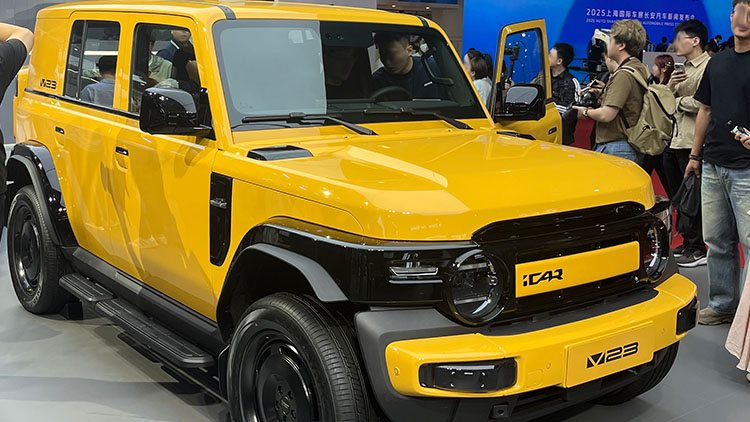
Chery’s iCAR (China)/iCaur (International) v23 at the 2025 Shanghai Motor Show. Pic: Michael Kay
Who’s to say
Chinese brands may be here to stay, according to Kay, but the other major global players won’t go quietly into the night.
“There will still be enough people wanting to buy BMWs and Mercedes, or even their Hondas and Nissans,” he said. “They won’t dominate like they once did, but won’t go away entirely.”
Expect larger brands to fight back, Kay said, in terms of pricing and discounts, even if he believes it will be in vain.
“These brands might continue to decline, but they are never going to be back at 2 per cent of the market,” he said.
Wang cautioned against declaring total Chinese manufacturing victory, noting other markets could pivot to take advantage of growing EV demand. Japanese and European OEMs are already collaborating with Chinese tech to close the gap with Chinese brands.
For the Australian market, “this will only be positive”, according to Wang, as access to newer and more innovative technology increases.
“Who's to say what will happen in the future?” he said. “I mean, everyone's got their eye on Australia at the moment.
“It’s likely the big influx of new EVs is yet to come.”
Shane White is Editor at ANZ Institutional Insights
