Since 2005, ANZ has reported on energy reduction against public targets. We monitor performance against both absolute and normalised (per FTE) consumption and seek to implement new initiatives as part of an overall performance improvement strategy focused on meeting both our targets and business needs.
ANZ spends approximately $21 million on electricity in Australia each year and our global use of electricity generates around 240,000 tonnes of greenhouse gas. Reduction of our energy consumption will benefit the environment whilst reducing costs to our business.
ANZ’s energy-management strategy is focused on:
Central to this strategy is the accessibility to good quality data (through sub-metering of electricity in our buildings), to implement continuous improvement. Annual budgets include specific allocation of funds to energy efficiency works.
| Constructing more sustainable and energy efficient offices |
|---|
|
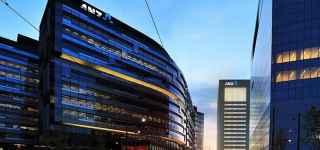
ANZ Centre, our new global headquarters at 833 Collins Street in Melbourne's Docklands precinct is home to 6,500 staff. It has been widely recognised as one of the world's most environmentally innovative workplaces in the financial sector. ANZ Centre is designed to produce 70 per cent less greenhouse gas emissions than a standard commercial office building and will generate some of its own electricity using an on-site tri-generation plant, pv (solar) cells and small-scale wind turbines. We are applying similar environmental requirements in our approach to identifying suitable commercial offices as ANZ grows across the region. In Singapore, we have recently moved into a new office building which has been granted Singapore’s highest environmental rating – ‘Green Mark’ Platinum and are seeking a ‘Green Mark’ Gold rating for our tenancy, as supported by our in-country environmental management system (EMS). In Brisbane, we will move into a new ‘6 Star Green Star’ design rated office building in early 2012 in which we are aiming for a ‘5 star NABERS Energy’ (National Australian Built Environmental Rating System) tenancy rating. It is estimated that moving into this new, more efficient Brisbane office will reduce our Australian emissions by 500 tonnes annually. In Sydney, we are scheduled to move into a new development in mid-2013. The property has been awarded a ‘6 Star Green Star’ office design rating. This new building will include environmentally sustainable design features and significantly improved work spaces that draw on the learnings and successes of the ANZ Centre in Docklands |
| EEO Verification |
|---|
|
In 2010 ANZ was selected by the Department of Resources, Energy and Tourism (DRET) to participate in an ‘Energy Efficiency Opportunities (EEO) Verification Exercise’ to assess our compliance with the Energy Efficiency Opportunities Act. The exercise recognised ANZ as demonstrating best practice in our approach to:
As a result of the Verification findings, ANZ has also been able to improve both EEO and energy management documentation to assist with the EEO reporting process. |
| Reducing energy use for After Hours Air Conditioning |
|---|
|
In 2011, ANZ introduced a new guideline for after-hours air-conditioning with the aim of reducing cost and energy consumption in commercial buildings. It has been estimated that between 30-40% of a building’s energy use is as a direct result of the building's heating, ventilation and air-conditioning (HVAC) system and, as such, after-hours air-conditioning can substantially impact building energy use. The revised approach is designed to strike a balance between good building management, emissions reductions and business requirements. The guideline has equal applicability to leased and owned premises. |
Premises energy consumption per FTE in Australia decreased 8% between 2009 and 2011 exceeding our 6% target. This was largely due to an excellent result in commercial building energy use which decreased by 12% through a combination of the move to ANZ Centre in Melbourne, (from more energy intensive buildings), alongside a A$4m capital investment program enabling operational improvements at other sites. Energy efficiency works have been focused on improvements to thermal metering, Building Control Management Systems, plant rooms and shut-off dampers, as well as the review of air-conditioning start-up and shut-down times.

Premises energy consumption per FTE in New Zealand decreased 4% between 2009 and 2011 exceeding the 2.5% target. A combination of factors was responsible for this result including improved energy management at data centres, reduced office space in Wellington, and energy efficiency gains across both the commercial and retail property portfolios.

Premises energy consumption per FTE has increased +3% primarily due to the overlap between our exit from previous Melbourne tenancies and the move to the ANZ Centre, alongside growth in energy consumption at the Data Centres. An Energy Efficiency program is currently underway in ANZ’s commercial and retail properties which will involve both capital and operational expenditure investment.

Electricity consumed per FTE has increased 3% on 2009 levels due to opening of and transition to our new data centre. This growth was anticipated and planned initiatives during 2011 will reduce premises energy intensity.

Future initiatives include:
ANZ has achieved four years of consecutive energy reductions per FTE in Australia. This includes achieving our two year environmental footprint target to reduce electricity consumption by 5% in Australia.
Our Australian operations achieved a 2% reduction per FTE for electricity in 2009, and a 6% reduction over two years, exceeding our two year target of a 5% reduction.

In New Zealand, while our absolute electricity consumption decreased by 3% in 2009, consumption per FTE increased by 3%.

Over the two years to September 2009 electricity consumption per FTE at our New Zealand operations decreased by 1%.
Electricity consumed in India decreased by 6% in India. See note to India data
ANZ has set a target to reduce premises energy per FTE by 6% in Australia and 2.5% in New Zealand by September 2011.
We are using a premises energy rather than an electricity consumption target to allow for the fact that a large proportion of energy consumed at our new Melbourne headquarters will be sourced from an onsite tri-generation plant which will convert gas to electricity.
Initiatives towards our target will include:
ANZ has achieved three years of consecutive energy reductions per FTE in Australia and New Zealand. In 2008 we have achieved a further reduction of 4% per FTE for electricity. This makes ANZ Australia well placed to meet the target of a 5% reduction target by the end of September 2009.
Our New Zealand operations also decreased their consumption by 3% per FTE over the past year. This has played an integral part in meeting the overall target to reduce greenhouse gas emissions for the period ending 2008.


ANZ will continue to aim for a 5% reduction in electricity consumption over the current two-year period in both Australia and New Zealand. In Australia the focus will be on developing new initiatives based on the smart meter information available in the branches and the commercial sites. In New Zealand, we are introducing the PC Snoozer initiative - an energy saving mode which 'powers down' PCs when they are not in use and over weekends.
You need Adobe Reader to view PDF files. You can download Adobe Reader free of charge.